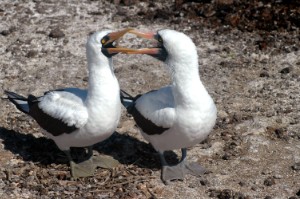
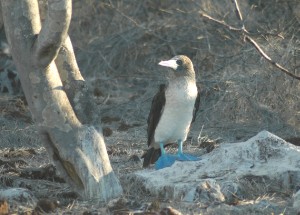
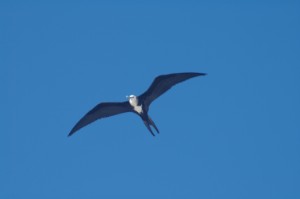
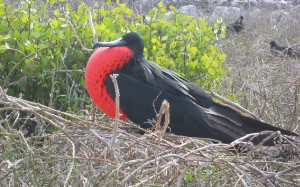
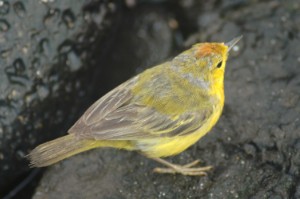
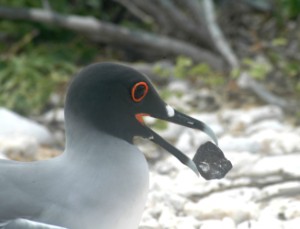
We walked among dozens of nesting boobies and frigate birds, and saw dozens of other species, mostly hunting for fish in tidepools and coastal waters.
Boobies
Boobies are silly-looking seabirds that are very numerous in the Galápagos. There are three species: blue-footed boobies, red-footed boobies, and Nazca boobies. More pictures...
Frigate Birds
Frigate Birds are another very common species. They are large fish-eating birds but they don't secrete any oil to waterproof their wings, so they can't dive into the water for fish. They have to either dip their beak into the water to catch a fish, but most of the time they harass other seabirds who have caught fish. They work in teams to get other birds to either drop or regurgitate their catch. Male frigate birds have a dramatic red pouch underneath their beak. More pictures...
Penguins
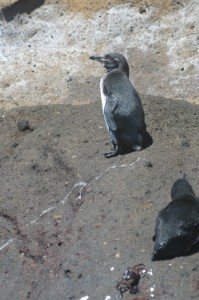
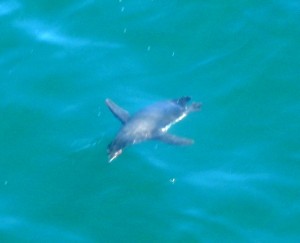
The Galapagos has its own species of penguins. It's unfortunate that there wasn't more time here on Isabela island (and everywhere). We just cruised in our little panga along the shore, and it was difficult to concentrate on the penguin behavior, let alone take photos. As usual, they paid no attention to us.
More pictures...
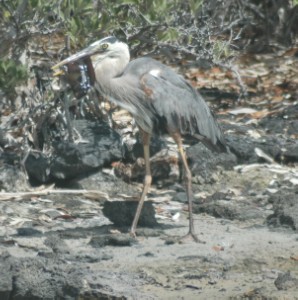
The Flamingos and the Heron
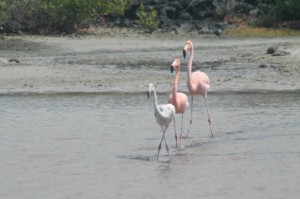
Our guide took us to a little lagoon where flamingos often hang out. More pictures...
Owls and Hawks
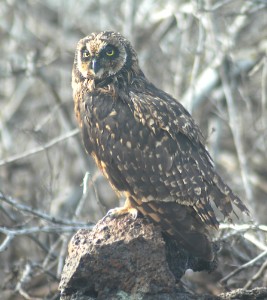
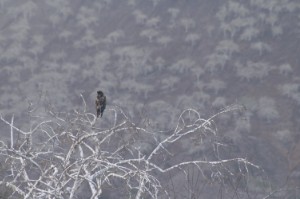
We saw some owls and a hawk. More pictures...
Darwin's Finches
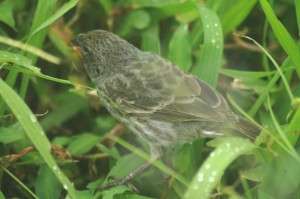
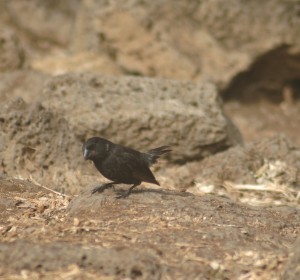
Darwin found thirteen species of finches in the Galapagos, and deduced that they had all come from a common ancestor. One of the geekiest t-shirts for sale in the islands features his diagram illustrating the radiation of the finches into their current habitats. Orlando can tell you what each one of these finches is but I can't.
More pictures...
Other Birds
There were many other birds, including doves and mockingbirds, gulls and tropic birds, brown pelicans, flightless cormorants, and many migratory shorebirds. More pictures...